
Toddler Tips: Creating Spaces That Support Natural Play

Jan 4 / Kimberley Crisp
When we think about toddler environments, it’s easy to drift toward ideas of “mini classrooms,” themed corners, or curated activity tables. But toddlers aren’t driven by curriculum—they’re driven by biology. Their natural urges, impulses, curiosity, and instinctive need to move are what shape their learning.

The secret? Make things simple.
Not “watered-down school.”
Not “watered-up heuristic baskets.”
Just simplicity rooted in what toddlers actually need.

Why Simplicity Matters

Think of how you feel walking into a store that’s overflowing with items in every corner. It’s overwhelming. Hard to think. Hard to choose. Hard to enjoy the experience.

Toddlers feel that too.

An overstimulating environment—too many toys, too much colour, too much “stuff”—can interrupt, distract, or even shut down the deep play they are designed for.

When we simplify, we create calm. When we remove the excess, we make space for focus, curiosity, and sustained engagement.

Designing a Toddler-Friendly Play Haven

When we follow toddlers’ natural needs, we create a space, place, and pace that supports their growing autonomy. That’s when our environment becomes a true play haven.
A few guiding principles:

1. Choose simple, open-ended objects

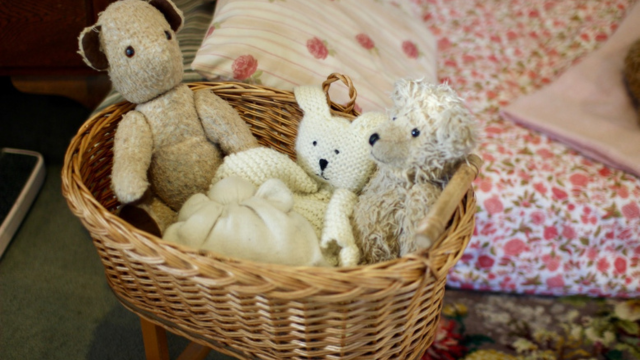
Loose parts are perfect: natural items, multiples of the same thing, baskets that double as collectors, transporters, or dumpers. Toddlers love to gather, carry, fill, empty, and repeat—because that’s what their biology is calling them to do.
2. Think low to the ground

Place materials on the floor or very close to it. Toddlers naturally seek grounded play—just notice how often they squat for long stretches, completely engrossed. That’s deep focus happening through self-chosen, self-timed play.

Tabletop activities aren’t wrong—but they rarely support the toddler’s need to move, tinker, and potter. When restricted to a table, many toddlers simply flit from one activity to another because it doesn’t pull them into that beautiful “state of play.”

3. Favour authentic experiences, not artificial activities

Rich play doesn’t live on a table. It lives…

  • in puddles
  • in the garden
  • under a tree
  • crouched over a basket of treasures
  • tucked into a cosy nook

When children are free to position their bodies naturally—squatting, kneeling, lying on their tummies—they find deeper, more sustained engagement.
4. Create small, enclosed spaces

Cover a table with a blanket. Add baskets under a shelf. Provide little hideaways and tucked-in corners. Toddlers feel secure in small, defined areas, and that sense of safety opens the door to rich, imaginative play.

5. Present provocations, but let the toddler lead

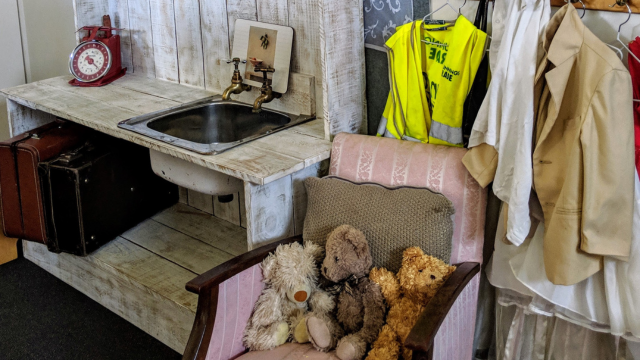
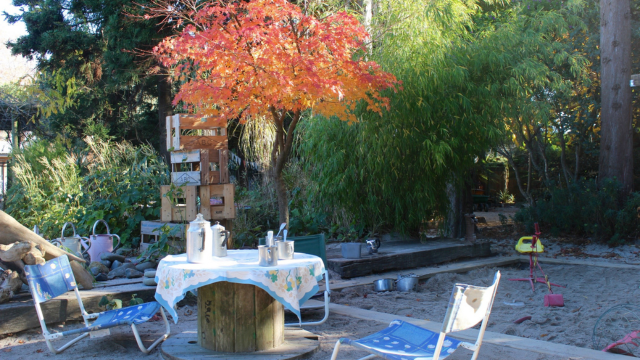
A beautifully displayed teaset, set of teddies, or collection of objects is simply an invitation. How toddlers use them is entirely up to their inner drives:

  • They might tuck the teddies into a suitcase and take them for a journey (the urge to transport).
  • They might gather them into families (the urge to connect).
  • They might carry the teaset to the sandpit to “cook dinner” (the transformation urge).

The play belongs to the toddler. Our job is simply to set the stage.
6. Take it outside—often

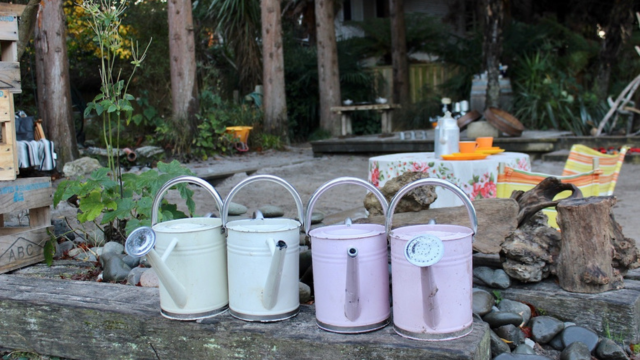
Toddlers gravitate to water for the same reason dogs chase sticks: it’s instinctual. So instead of battling the impulse (“Why are you back in the sink again?”), provide water outside where they can splash, pour, fill, and explore freely.

Outdoor nooks and inviting spaces near the ground mirror everything toddlers need: movement, freedom, and connection with nature.
In the End… Keep It Simple

When we strip away the unnecessary and design with toddlers—not adults—in mind, we create environments that feel safe, calm, and deeply engaging.

Simplicity isn’t boring.
Simplicity is biology.
Simplicity is powerful.

And simplicity creates the perfect haven for toddlers to follow their natural urges and unfold into confident, capable explorers.

Download this blog as a printable PDF

written by

Kimberley Crisp

Kimberley is a flower picking … candle burning … potion creating … animal loving bohemian at heart She and her partner and their 2 rescue fur babies Lincoln and Basil live a life by design creating adventures between their house bus Billie and their Tiny Home ‘ Tiny on Te Awa’ .

Her early childhood years was where she developed a wild love affair with nature. A passionate Nana who took her on beach picnics and where outside in the garden is where they literally lived their days together. Flowers and animals partnered with special Rituals create the ‘ anniversaries of the heart ‘ she so fondly shares today.

“May the beauty of what you love be what you do “ Rumi
A mantra Kimberley uses to guide all her work .
Kimberley has a Bachelors in Education ( ECE) and cofounder and creator of The Nest Private Kindergaten.
It was the the ‘ birth ‘ of this model that fast became the ‘ teaching ground ‘for not only her but hundreds of other professionals that would visit and see feel and hear a different’ way of being ‘ .
Kimberley’s creativity didn’t stop at The Nest she always wanted to establish a model outside the system with NO strings so ‘The Haven’ was birthed into being and this was a Home Schooling hub where children between 5-13 years of age cross pollinate OUTSIDE.

This was by far the most SIMPLE….
It was outside the system : OUTSIDE.
Kimberley has been to The Pikler Institute in Hungary multiple times to study and visited The Forest Kindergarten in Germany.
After 30 years of working with and alongside children and delivering Professional Development every weekend and in evenings Kimberley is now devoted to supporting individual teachers and teams sharing ALL her tried and true experience and supporting people to shine and be the authentic souls they are born to be. Kimberley believes the best teacher is the one that sees the light in those they are teaching.

Learn more with ECELU

Webinars, courses and resources covering all areas of the ECE sector. Ready for you to start anytime from any device.