Stress in Early Childhood: How it impacts children

Feb 20 / Jessica Thomson
In early childhood education, stress doesn’t always show up the way adults expect it to.

It doesn’t usually look like a child sitting quietly saying, “I’m stressed.”
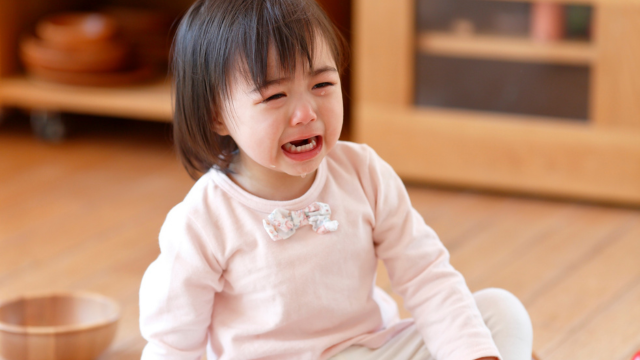
It looks like tears over tiny things, pushing, constant “no’s,” sudden anger, clinginess, or a child who seems to completely fall apart the moment their adult walks away.

And here’s the important part: stress isn’t just emotional, it’s biological. When a child is stressed, their whole body shifts into survival mode. That shift changes how they think, how they respond, and how they cope with the world around them. It impacts learning. It impacts behaviour. It impacts relationships.

So when we say stress affects children, what we’re really saying is: stress changes the way a child’s brain and nervous system can function in that moment and one of the biggest misunderstandings in early childhood settings is this: we often interpret stress as defiance.

A child who refuses to pack away, won’t come inside, pushes another child, or yells at the teacher can easily be labelled as “naughty” or “not listening.” But most of the time, what we’re witnessing is something deeper, it’s a child whose nervous system is overloaded.

This idea is strongly supported by Dr Bruce Perry, a leading neuroscientist in childhood trauma and development. Perry explains that children can’t access higher thinking when they are stressed. Instead, their brains shift into lower survival states. When children are overwhelmed, their bodies are more focused on staying safe than they are on cooperation, learning, or making good choices. That’s why so often, stress shows up as behaviour. The child isn’t trying to make the day harder, they are trying to cope in the only way their body knows how.
Stress literally changes what part of the brain children can access

When children feel safe, they’re more able to use the parts of the brain responsible for curiosity, language, reasoning, empathy, and memory. They’re able to play deeply, take turns, negotiate, and problem-solve, but when children feel unsafe, even emotionally unsafe, the brain itself shifts priorities.

Dr Bruce Perry describes this as state-dependent functioning. In simple terms, it means the child’s capacity depends on the child’s state. If a child is regulated, they can reason. If they are dysregulated, they can’t access the “thinking brain” in the same way. This helps explain why a child might be able to manage beautifully one day, and then seem totally undone the next. It’s not that they’ve suddenly become difficult. It’s that their brain is operating from a different state. With this, I feel that the most important thing to understand is: young children don’t have mature regulation skills yet. Their brains are still developing, and they rely on adults to help them return to calm.
Stress isn’t always loud, sometimes it looks like quiet withdrawal

It’s easy to notice stress when it’s explosive, of course, how can you not notice that. But many children experience stress in ways that look almost invisible. Some children withdraw. They become quiet, avoid engagement, refuse to participate, or watch from the outside. They might go “blank” during group time or avoid eye contact. They may not seem upset at all, but inside, their nervous system is still activated.

This links closely to Polyvagal Theory (Stephen Porges), which explains that humans respond to stress through different nervous system pathways, not only fight or flight, but also shutdown. When children feel overwhelmed and don’t believe they can cope, their bodies can move into a freeze response. The child isn’t choosing to disengage, their system is conserving energy and protecting them from further stress. So when we see a child “switch off,” we need to consider: Is this defiance… or is this survival?

Stress in early childhood is deeply connected to relationships as we know, because children rely on co-regulation. This is why attachment theory is so relevant in ECE settings. John Bowlby, who developed Attachment Theory, believed that children need a secure base - a trusted adult who provides safety, predictability, and emotional availability. When that security is present, children feel confident to explore. When it’s uncertain, children become hypervigilant and reactive. We often see this in settling periods, transitions, and changes to staffing. A child might cope well when their trusted adult is present, but unravel as soon as that adult steps away. That’s not “being difficult.” That’s the attachment system activating.

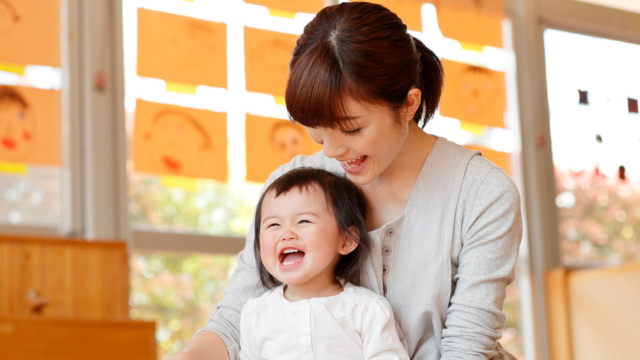
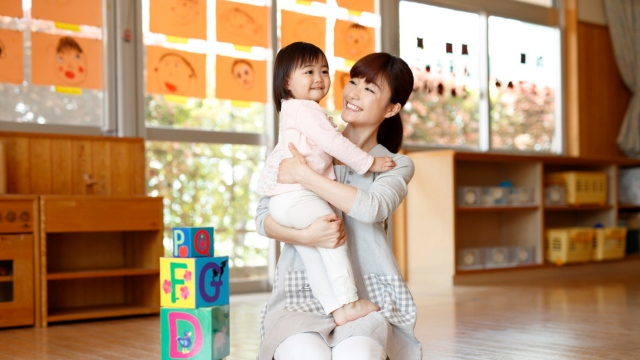
This is also why consistent, warm, reliable educators are so protective for children. We are not “just” supervising. We are literally functioning as part of the child’s regulation system.
Vygotsky reminds us that children learn regulation through us

It’s tempting to think children need to learn emotional regulation independently - but theory tells us the exact opposite. Lev Vygotsky emphasised that children develop higher skills through social interaction first, before they become internalised. This applies beautifully to emotional regulation. Children learn calm through calm, they learn problem-solving through being supported to solve problems, they learn emotional language through hearing adults name emotions. Over time, the child begins to take what was once external support - and make it internal.

So when we co-regulate, we are not “doing it for them.”
We are teaching the skill.
So what can educators actually do?

The most powerful response to stress isn’t to become stricter; It’s to become steadier. When a child is stressed, the educator’s nervous system becomes the anchor. Your voice, your pace, your presence, your consistency - these things help the child’s body return to safety. In moments of stress, children don’t need us to be louder. They need us to be calmer. They don’t need us to take control. They need us to be connection.

Because when stress is driving behaviour, the pathway back isn’t punishment - it’s regulation and relationship.

When we understand stress, we stop seeing behaviour as something to “fix” and begin seeing it as something to respond to with empathy and skill.

Stress impacts how children:

  • learn
  • connect
  • cope
  • trust
  • engage
  • regulate

And educators have an incredible role in buffering those impacts.

Every time you respond with calm, predictability, and connection, you are doing more than guiding behaviour - you are helping to shape the way a child experiences safety in the world.

That work matters more than most people will ever realise.

Download this blog as a printable PDF

written by

Jessica Thomson

Bachelor of Teaching (ECE)

Jess is an experienced early childhood leader and educator with a passion for inspiring teachers and supporting professional growth. A proud mum of three, she blends real-life experience with a deep understanding of early learning, leadership, and curriculum design.

Her writing reflects key early childhood frameworks and professional standards, connecting theory with the realities of teaching and leadership. Through ECE Learning Unlimited, Jess shares reflections and resources that encourage educators to grow, lead, and thrive.

Learn more with ECELU

Webinars, courses and resources covering all areas of the ECE sector. Ready for you to start anytime from any device.